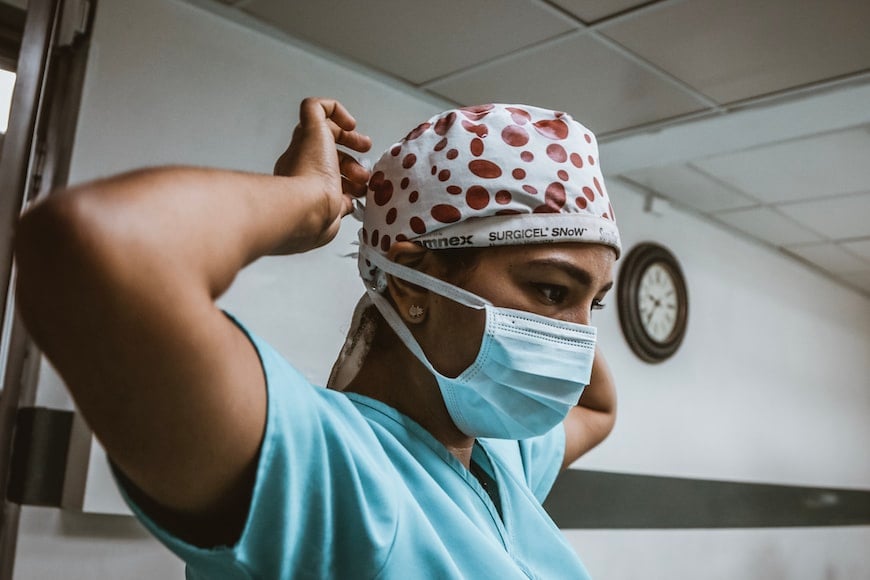
Applications to bachelor's and graduate nursing programs rose nearly 13% in 2025, to over 820,000. Schools turned away more than 93,000 of those applications, all of which met the requirements for admission, according to the American Association of Colleges of Nursing (AACN).
"Strategies to expand the nursing student population and address the ongoing nursing shortage are showing promising results," Deborah Trautman, the association's president and CEO, said in a statement when the survey was released.
Enrollment did grow, with entry-level bachelor’s programs enrolling 7.6% more students, the third straight annual increase, and master’s enrollment rose 6.8%. Applications grew faster, though, and the squeeze falls hardest on applicants to entry-level programs, where clinical rotations are scarcest.
Nurses who already hold a license face a different hurdle in finding a program that fits around their shifts, and online program delivery can potentially widen access. Risepoint, a global education technology company, works with more than 100 universities, and its regional university partners are using online programs to reach those licensed nurses who need another degree to move up.
What keeps nursing schools from admitting every qualified applicant?
In its May release, AACN said “the primary barriers to accepting all qualified students at nursing schools are insufficient clinical placement sites, faculty, preceptors, and classroom space, as well as budget cuts.” Preceptors are the practicing nurses who supervise students in clinical settings.
About four in five of the turned-away applications were for entry-level bachelor's programs. Students in those programs need hundreds of hours of supervised clinical rotations, and each hospital unit can take only so many at a time. Master's and Doctor of Nursing Practice programs turned away about 16,000 more.
AACN's October 2025 survey of nursing schools found nearly 1,600 full-time faculty vacancies, a 7.2% vacancy rate, and 150 of the 385 schools with no budgeted vacancies said they still needed more faculty. Most of the open jobs required or preferred a doctorate, so graduate programs help set how many new nurses schools can train.
Online programs widen access
Online delivery helps most when the student is already a nurse. A registered nurse with an associate degree who wants a bachelor's has a license and likely already has a job in healthcare. For many such nurses, the harder part is fitting school around 12-hour, night, or rotating shifts.
Some regional universities now design their RN-to-BSN programs for nurses in that position. Fitchburg State University in north central Massachusetts offers its RN to BS in Nursing online with support from Risepoint. The university describes the program as "delivered in an accelerated online format to meet the needs of working nurses."
Courses run seven weeks. Students who take only nursing courses, two per session, can finish in as little as 12 months. The Commission on Collegiate Nursing Education accredits the program, which requires an RN license for admission. But it still includes clinical work: a 45-hour population health practice experience and a capstone clinical course.
The university owns curriculum, admissions, instruction, and financial aid, and Risepoint provides technology, initial student outreach, faculty support, and retention services.
What nursing graduates report
A Risepoint-commissioned 2026 Ipsos study of more than 8,500 graduates of Risepoint-supported programs, about 1,650 of them in nursing, offers the broadest look at how they have fared.
For nursing graduates surveyed about a year after finishing, Ipsos calculated that higher earnings would cover the cost of tuition in just under two years on average. Nursing graduates three years out said their salaries had risen 35% on average. Across all fields, 59% of the graduates said they chose an online program so they could keep working, and 74% said the degree had advanced their career.
While the turned-away applications speak to how many people want into nursing, and how much of the bottleneck sits in clinical sites and faculty, enrollment in RN-to-BSN programs shows the other side. It rose 2% in 2025, to 92,447 students, after five straight years of decline, and only about 1,000 RN-to-BSN applications were turned away. For licensed nurses, access depends less on an open clinical slot and more on a program that fits around the next shift.