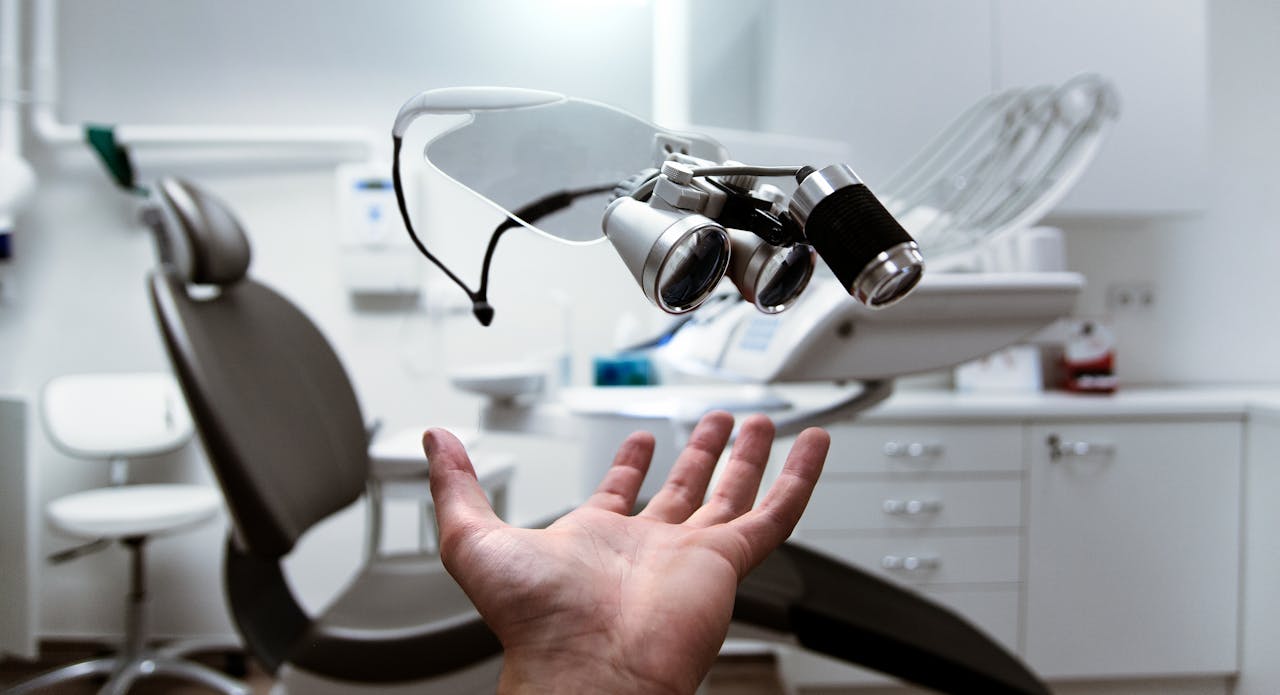
The dental industry is undergoing a quiet but significant technological shift. While much of the healthcare technology conversation has centered on AI diagnostics and telemedicine platforms, a parallel transformation is happening inside cosmetic dentistry clinics — where digital design software, CAD/CAM milling systems, and intraoral scanning hardware are converging into fully integrated workflows that eliminate the inefficiencies of traditional lab-to-clinic handoffs.
For decades, the process of designing and fabricating dental restorations involved a fragmented chain: a dentist would take physical impressions, ship them to an external laboratory, wait days or weeks for fabrication, and then hope the final product matched the original clinical vision. Each handoff introduced variables — material shrinkage, interpretation differences between clinician and technician, communication delays — that compounded into inconsistent results.
The new model looks fundamentally different. Clinics operating at the forefront of this shift are bringing the entire chain in-house, from the initial 3D scan to the final porcelain layering, controlled under one roof with shared digital files rather than physical molds.
The Architecture of a Fully Digital Dental Workflow
A fully integrated digital workflow in cosmetic dentistry typically begins with an intraoral scan — a handheld device that captures a precise 3D map of the patient's dental anatomy in minutes. This replaces the traditional putty-based impression, reducing patient discomfort and improving dimensional accuracy.
The scan data feeds directly into smile design software, where clinicians can plan treatment outcomes with millimeter-level precision before any clinical work begins. Patients see a digital preview of their result, approve the design, and the file moves seamlessly into the fabrication phase.
This is where vertical integration becomes a technological differentiator. Clinics that operate their own ceramics laboratory — equipped with CAD/CAM systems, pressing ovens, and layering stations — can iterate on restorations in real time. If a shade needs adjustment or a contour requires refinement, the feedback loop is measured in hours, not days.
ACE DNTL STUDIO, a cosmetic dentistry practice operating across Marbella, Estepona, and Dubai, has built its entire clinical model around this principle. By housing an in-house ceramics laboratory alongside its clinical operations, the practice controls every variable from digital scan to final bonding — a workflow architecture that removes the latency and interpretation loss inherent in outsourced fabrication.
Why Vertical Integration Matters for Clinical Precision
The technical advantages of this model are measurable. When the clinician who designs the case is working in the same facility as the ceramist who fabricates it, the margin for communication error drops substantially. Digital files replace written prescriptions. Real-time calibration replaces batch processing.
The impact on material quality is particularly relevant. High-end porcelain restorations — the kind used in porcelain veneer procedures — require hand-layering techniques where translucency, opacity, and surface texture are built up in stages. This is inherently artisanal work, but it benefits enormously from digital precision in the planning phase. When the ceramist receives an exact digital blueprint rather than a verbal description, the artistic execution becomes more consistent and more predictable.
The Role of Digital Smile Design in Patient Communication
One of the less discussed but commercially significant aspects of digital workflow integration is its effect on patient communication. Traditional cosmetic dentistry relied heavily on before-and-after photo galleries and verbal descriptions to set expectations. The gap between what a patient imagined and what a clinician delivered was a persistent source of dissatisfaction.
Digital Smile Design technology changes this dynamic entirely. Using facial analysis software and 3D modeling, clinicians can show patients a photorealistic preview of their post-treatment appearance before any preparation begins. The patient becomes an active participant in the design process rather than a passive recipient of clinical judgment.
This has measurable effects on treatment acceptance rates and post-procedure satisfaction scores. When patients can approve a specific design in advance, the likelihood of revision requests drops and the perceived value of the procedure increases — a meaningful operational improvement for practices managing complex aesthetic cases.
Scalability and the Multi-Location Challenge
As digitally integrated practices expand to multiple locations, the workflow architecture faces new challenges. Maintaining consistent output quality across geographically separated clinics requires standardized digital protocols, centralized design oversight, and calibrated equipment across sites.
The practices solving this effectively are treating their digital infrastructure the way technology companies treat software deployment — with version-controlled design templates, standardized scanning protocols, and centralized quality review before fabrication begins at any location. This approach allows a multi-site practice to scale without the quality variance that typically accompanies geographic expansion.
What This Means for the Broader Industry
The convergence of scanning hardware, design software, and in-house fabrication represents more than an incremental improvement. It is a structural change in how cosmetic dental services are delivered — one that rewards practices willing to invest in vertical integration over those relying on distributed supply chains.
For the technology sector, this trend signals growing demand for integrated dental software platforms, improved intraoral scanning hardware, and CAD/CAM systems designed specifically for chairside and in-house laboratory use. The practices adopting these tools today are building competitive advantages that will be difficult to replicate once the technology becomes standard.
The dental industry may not generate the headlines that other healthcare technology verticals do, but the operational transformation happening inside forward-thinking clinics is real, measurable, and accelerating.