From workshops to warehouses and from technology labs to temporary relief shelters, pre-engineered buildings are revolutionizing the way we build. They are quick, versatile and affordable, and represent a go-to option for companies seeking better solutions.
If you’ve ever driven past a half-finished construction site and wondered why building something still feels like a medieval process, you’re not alone. Between pouring concrete, welding steel on site and waiting months (or years) for a project to wrap up, traditional construction often feels like it hasn’t caught up with the digital age. But here's the good news: A new generation of building technology is in the works, and it all centers around something called the pre-engineered building.
Now, don't go picturing some cold, lifeless metal barn just yet. Pre-engineered buildings (PEBs, in short) are much more than most people believe. They're not "big metal boxes", they're systems of efficiency for customization and flexibility in a more and more rapidly paced world.
What is a pre-engineered building, anyway?
In short, a pre-engineered building is a building where most of the designing and components are completed at the factory before it ever arrives on the job site. It's the IKEA method of buildings, but bigger, stronger and much less frustrating to put together.
Instead of cutting steel beams and welding them together on site, everything is prefabricated. Columns, beams and panels are pre-configured to fit together. They fit together like puzzles, saving time and effort on the job site.
This approach creates a significant time and cost saving. For example, a warehouse that can take a year to build using traditional construction methods can in some instances be completed within a few months using a PEB. That is the power of smart designing along with industrial scale expertise.
Why tech-savvy industries love PEBs
Technology develops very quickly. If you work in a field like manufacturing, aerospace, wind and solar energy, or data storage, you don't always have three years to sit back and wait for a new building. You need space today, be it for machinery, to house materials or to expand operations. Pre-engineered buildings deliver exactly that. They're:
- Easy to install: Assembly is weeks, not years.
- Very versatile: Need a hangar? A lab? A climate-controlled server room? You can construct it.
- Portable: Some buildings are even disassembled and moved.
- Very cost-effective: Less labor, less wasted material, lower overall project cost.
No surprise that increasing numbers of industries are turning to PEBs to bridge the gap between their needs and the limitations of traditional construction.
Breaking the myths: They're not really warehouses
When one hears "pre-engineered building," most people picture unlimited strips of sterile industrial warehouse space. Yes, warehouses are definitely one of the most common applications, but PEBs can accomplish so much more.
They're employed as schools in remote villages, clinics in relief work, modular office complexes for high-tech companies, sports arenas, airplane hangers and even high-end retail outlets. Their versatility in design makes them into chameleons in the building industry.
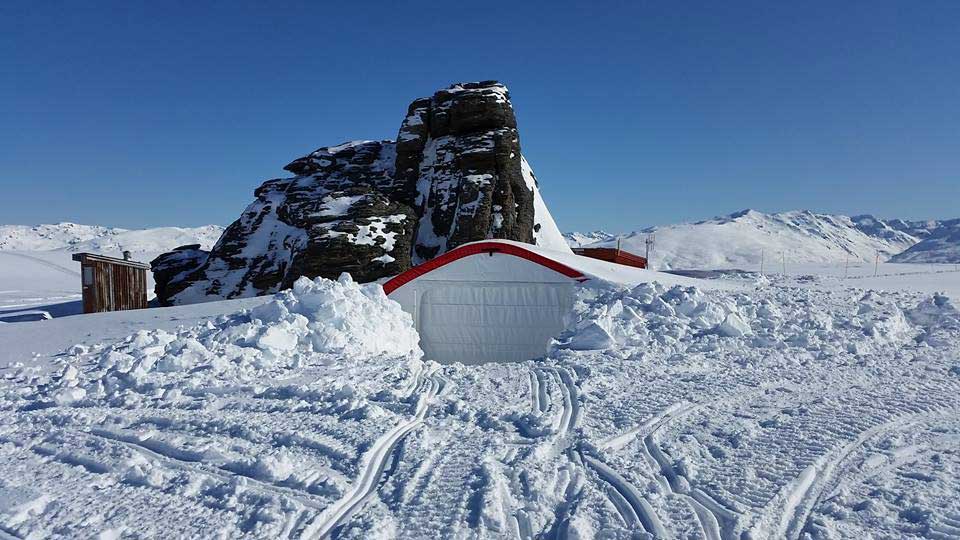
Some companies are pushing the limits even further. Take Alaska Structures, for example. They specialize in engineered fabric buildings that are versatile, durable and require no foundation. Their products come in different sizes and are used across industries from oil and gas to disaster relief. Because they’re pre-engineered, these fabric buildings go up quickly and can serve as temporary or permanent solutions depending on the need. It's an evolved take on the PEB concept, showing that the idea can't be restricted to steel and concrete.
Benefits that sell themselves
So, why are pre-engineered buildings being adopted? Let's break down the key benefits:
Speed
Time is money, and PEBs save both. With the designing, fabrication and assembly process streamlined, projects get over much faster than traditional construction.
Sustainability
Less material, less waste and the potential to recycle portions make PEBs a green choice. And they can often be made very energy efficient.
Cost control
Traditional construction is notorious for going over budget. Budgets with pre-engineered buildings are more reliable because a great deal of the construction takes place off-site.
Durability
Don't get confused by the modular idea. PEBs are built to be tough and survive ugly conditions, be they in the shape of heavy snowfall, strong winds or unfriendly climates.
Scalability
Have to expand in the future? No problem. PEBs are constructed with expansion in mind, so adding new sections is generally much easier than retrofitting an old-style building.
The tech angle: Smarter, leaner, more adaptive
For an audience that is technologically oriented, what is news about PEBs is the way they mirror the spirit of efficiency and adaptability underlying today's thinking. Similar to how software development moved from monolithic to modular systems, construction too is following the same trend.
A pre-engineered building is indeed a system; one that could be deployed, expanded and even relocated as circumstances shift. In an era of companies embracing agility, why not buildings too?
Building smarter, not harder
Construction has always been one of the slowest sectors for human beings, but pre-engineered buildings are reversing all of that. Pre-engineered buildings provide speed, value and versatility, which is perfect for industries that quite simply can't afford to be slow-moving.
From factory floors and distribution warehouses to medical bunkers and laboratories, PEBs are redefining what it means to "put up a building." Companies like Alaska Structures show how extensive the concept can be, offering hardened, no-foundation structures that operate in virtually any condition.