With obesity statistics rising by the day, with currently more than one-third of all U.S. adults and 17 percent of children considered larger than they should be, it’s obvious that something needs to be done and fast. In fact, the World Health Organization recently revealed that physical inactivity is ranked fourth as the biggest cause for people losing their lives too soon with an estimated 3.2 million deaths.
While it can be hard to get “normal” kids away from the television or the computer, it can be even tougher to get students with special needs engaged in sports they can play without getting hurt while considering their slight limitations. Luckily, certain activities including dance, aquatics and yoga are now being implemented at special needs schools all over the country, helping to take the first step in biting this problem in the bud.
For example, at the Aaron School, a private special needs facility in New York City, gym classes are now incorporating video sports games into classes. Kinect, Nintendo Wii and Playstation 3 are all being leveraged to encourage students that may not be able to run outside that they can still get some much needed exercise.
Here are the three best games to think about when trying to get your students into a gym flow they will enjoy:
Bowling
It’s really easy to understand, it doesn’t take much skill, and it builds arm muscles. “While 'playing' this game, students are required to reach to their left or right to select a ball, swing their arm forward to bowl and exaggerate the arm movement to add spin. Teacher instruction in scoring is an added component, and there is also a timed option for this game which improves motor fluency,” according to a recent article.
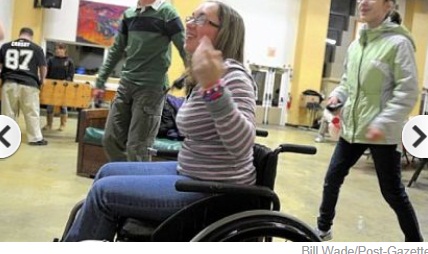
Table Tennis
A little more involved, this sport can help to drive hand-eye coordination, an important skill everyone must master. Yet, it can be played while either sitting or standing appealing to a large audience that doesn’t discriminate.
Soccer
The piece added, “In addition to the motor patterns needed to execute the action, this requires spatial awareness and use of strategy. Being able to change speed and change direction are important skills for playing soccer and they are taught using this format in a controlled, systematic fashion.”
When you think of kids and video games, you probably wouldn’t immediately conjure up the image of the blood a’rushing and the sweat a’dripping. But with newly released technological options, anything is possible.
Edited by
Brooke Neuman